84-Year-Old Self-Made Businessman Who Founded a University Opens Up on His Life Story
An 84-year-old Nigerian businessman with no formal education, Al-Hikmah University founder Abdulraheem Oladimeji, recounts how faith, personal sacrifice, and decades of resilience enabled him to establish a thriving university in Ilorin that now educates over 11,000 students.


An 84-year-old Nigerian businessman with no formal education, Al-Hikmah University founder Abdulraheem Oladimeji, recounts how faith, personal sacrifice, and decades of resilience enabled him to establish a thriving university in Ilorin that now educates over 11,000 students.
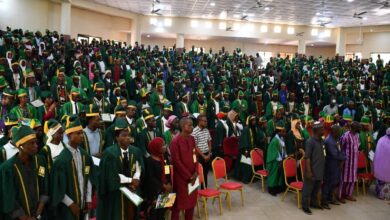
Against all odds, an 84-year-old Nigerian businessman with no formal education has successfully built a thriving private university with more than 11,000 students. Founded in 2005, Al-Hikmah University, located in Ilorin, was established by Alhaji Abdulraheem Oladimeji, a self-made entrepreneur whose journey into education defied logic and expectations.
In an interview, Oladimeji explained that the idea to invest in education came after one of his sons dreamt that he would establish an Islamic university while on pilgrimage in Saudi Arabia in 1994. The dream aligned with his long-standing desire to contribute to humanity through both Islamic and Western education.


Originally, Oladimeji had planned to open a plastic manufacturing factory and had already imported machinery and completed most of the buildings.
However, he abandoned the project and redirected his resources toward establishing a university—despite knowing that education does not yield quick financial returns.
“I didn’t do it for profit,” he said. “I wanted to serve humanity.”
Leading Without Formal Education Although he never attended formal school, Oladimeji said God blessed him with wisdom, discipline, and attention to detail, which helped him manage the institution. He emphasized the importance of appointing competent professionals to key leadership roles such as vice chancellor, deputy vice chancellor, and bursar.
He revealed that some vice chancellors were removed before completing their terms due to poor performance, stressing that tough decisions were necessary for the university’s growth.
How It All Started
The journey began with AbdulRaheem College of Islamic Foundation, affiliated with Ahmadu Bello University, the International Islamic University in Sudan, and later the Islamic University in Madinah, Saudi Arabia. These affiliations eventually paved the way for a full university license during the administration of former president Olusegun Obasanjo. He also established AbdulRaheem College of Advanced Studies in Igbaja to prepare students for admission into degree programmes. Financial Sacrifice and Challenges Oladimeji admitted that he underestimated the financial burden of running a university. He initially paid ₦100 million for the operating license, which was later refunded by the government after officials were convinced the institution could sustain staff salaries.
The government required 10,000 acres of land and offered minimal support for infrastructure development. To keep the project alive, he sold half of his properties abroad.
“I was happy to do it,” he said. “It fulfilled my life’s purpose.”
A Life of Hustle and Determination Born in Igbaja, Oladimeji lost both parents at a young age and was raised by his uncle. His early exposure to farming and petty trading shaped his work ethic.
Attempts to attend school were cut short due to his uncle’s fears about harsh discipline in Western education. He later moved to Lagos as a child, working menial jobs before becoming a trade apprentice.
Though unpaid for years, he gained invaluable business experience and eventually became independent in 1963. Determined to become literate, he organised informal evening lessons where he taught Yoruba alphabets and learned English alongside his students—a strategy that helped him read and write without formal schooling.
Today, the once-uneducated boy has become the founder of a university employing professors, doctors, and academics.
“It’s all by the grace of God,” he said.